Racing games are thrilling because they are so easy to start. Press the accelerator and you are off. Yet the difference between finishing in the middle of the pack and taking first place usually has little to do with top speed. It comes from how you take corners, when you brake and how you use boosts. This guide explains the core techniques that apply to most racing games, from arcade kart racers to realistic circuits.
Know your controls first
Racing games use a fairly standard set of controls. On a keyboard, W or the up arrow usually accelerates, S or the down arrow brakes or reverses, and A and D or the left and right arrows steer. Space or Shift often handles drifting, the handbrake or nitro. On phones, you will typically see on-screen pedals and steering buttons, or the accelerator may be automatic. Check the controls section on each game page before you start, because these assignments vary.
The racing line
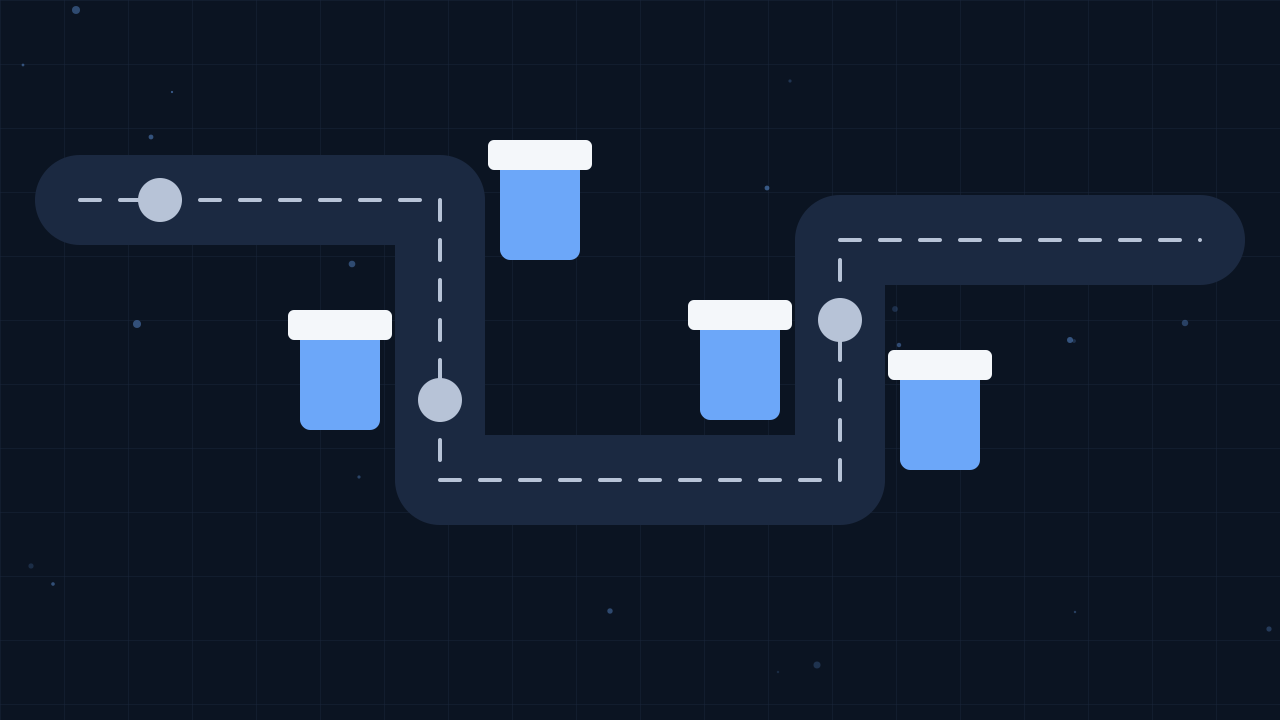
The racing line is the path through a corner that lets you keep the most speed. The classic approach has three parts:
- Approach wide. Move to the outside edge of the track before the corner.
- Cut to the apex. Turn in and aim for the innermost point of the bend, called the apex.
- Exit wide. Let the car drift back toward the outside as you leave the corner and accelerate.
This wide, inside, wide pattern straightens the curve as much as possible, which means you can carry more speed through it. In arcade racers the effect is less strict, but the principle still helps.
Braking points
Many new players either never brake or brake far too late. The fastest approach is to brake firmly in a straight line before the corner, then release the brake as you turn in. Braking while turning hard can cause a spin or a slide in many games. Pick a landmark beside the track, such as a sign or a tree, and use it as your braking point on each lap. Over time you can move that point a little later.
Drifting
Drifting means sliding the car sideways through a corner while keeping control. In arcade racers, it is often a deliberate technique triggered by a drift button. Holding a drift through a bend frequently charges a boost, which you release as you straighten up. To drift well:
- Start the drift slightly before the corner, not in the middle of it.
- Use gentle steering adjustments to hold the angle.
- Release as the road straightens to collect any boost cleanly.
- Avoid drifting on short straights, where it only slows you down.
Some games reward longer drifts with stronger boosts, often shown by sparks changing color. Learning how long to hold a drift on each corner is one of the most satisfying skills in kart racing.
Nitro and boosts
Nitro gives a burst of extra speed, but when you use it matters as much as how much you have. The best moments are:
- On long straights, where you can enjoy the full burst without needing to steer.
- As you exit a corner, to regain speed quickly.
- To overtake when a rival is just ahead on a straight.
Using nitro just before a sharp corner usually wastes it, because you will need to brake anyway. In stunt games, nitro can also help you clear long jumps or gaps.
Overtaking
Passing rivals cleanly is an art. The easiest place to overtake is on the inside of a corner, by braking a little later than the car ahead and taking a tighter line. On straights, following closely behind a rival and then pulling out with a boost works well. Avoid crashing into opponents, which in most games slows you down too.
Items and weapons
Kart racers often include items such as rockets, shields or throwable objects. Save defensive items like shields for when you are leading, since that is when you will be targeted. Throw attacks forward at the racer just ahead, and if a game lets you fire backward, use it to discourage someone right behind you.
Stunt and physics racers
Some racing games focus on balance rather than speed, such as motocross games where you lean the rider forward and back. The key there is to keep the vehicle level in the air so both wheels land together. Leaning back on take-off and forward on steep descents generally helps. Our guide to physics games explains why these games feel the way they do.
Practice smarter
- Learn one track at a time rather than switching constantly.
- Focus on one corner that keeps catching you out.
- Use time trial modes to practice without rivals.
- Spend upgrade coins on handling and acceleration before pure top speed.
Hit the track
With good racing lines, sensible braking and well timed boosts, you will be surprised how quickly your times improve. Find your next challenge in the Racing and Driving category, from relaxed open roads to frantic kart cups.